
Building Our Data Capacity to Improve Collective Impact Storytelling
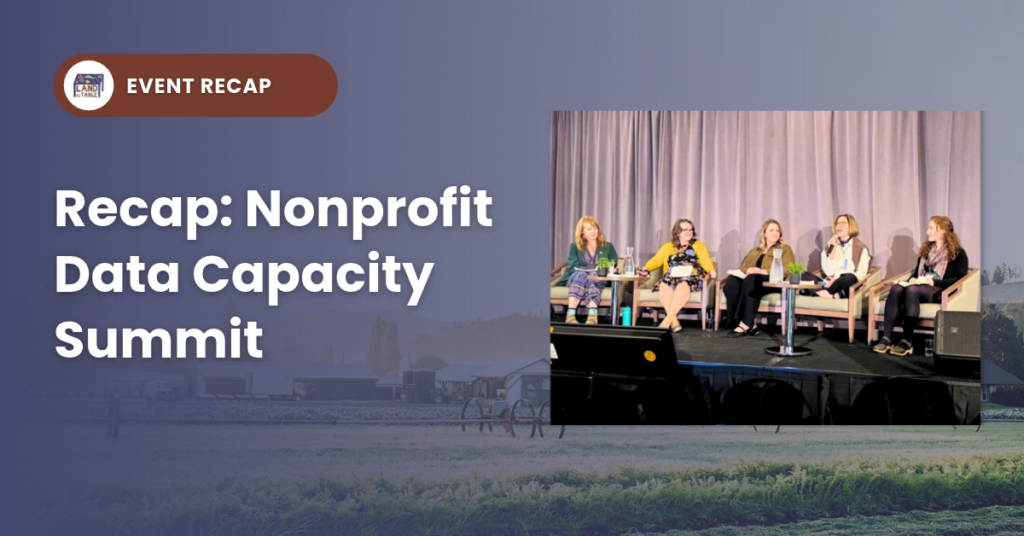
Earlier this month, Land to Table’s Food Security Manager, Sammy Blair, travelled to Toronto with Hilary Henegar, Co-founder, Program Lead & Coach at Abundance Collective, for the 2026 Nonprofit Data Capacity Summit on October 8. The day was organized by Blueprint who presented the event with Purpose Analytics, with funding support from the Government of Canada’s Future Skills Centre. The Summit was built for anyone in the nonprofit sector who works in program management, evaluation, operations or strategy, whether they were just starting to use data or are ready to go deeper. Sammy and Hilary spoke on a panel about how funders and organizations can turn data into real momentum for change. They shared the stage with the Charity Insights Canada Project and RBC’s Stronger Nonprofits program, moderated by Liz Forsberg of the Toronto Arts Council.
Over the past year, Land to Table took part in the Okanagan Prosperity Fund Impact Measurement Learning Program. The Community Foundations of the Central, South and North Okanagan led the program, and the team that has since become Abundance Collective delivered it. Abundance Collective is a new women-led, employee-owned firm that emerged out of Purppl, and it now runs the Impact & Leadership Development Program (ILDP).
About 30 organizations joined the Impact Measurement Learning Program’s learning cohort. Land to Table was one of five that went on to one-on-one coaching. With coach Brianna Ennis-Brown, the team built two Theories of Change, one for Land to Table and one for The Food Shed, plus an Impact Measurement Framework that sets out clear indicators and how they’ll be collected. Those indicators link the network’s work to wider measures like Vital Signs, The United Nations Sustainable Development Goals, and to what funders such as the City of Vernon and United Way British Columbia need to report on. The board has used the Theory of Change to shape Land to Table’s strategic plan. Sammy has since become the organization’s impact measurement lead, training The Food Shed team to build data collection into daily operations and helping the network plan how to share and report data with it.
The message Sammy brought to Toronto was simple. One organization’s numbers tell one story, but a network that collects data consistently can tell a much bigger one. When members and partners track shared indicators, Land to Table can show what’s changing across the regional food system and back it up with evidence. This collective story is what the network needs to push for stable funding, influence policy, and make the case for local food. Good data isn’t a reporting chore. It’s the raw material for the stories that move people. The flip side, which the panel was honest about, is that this takes dedicated staff time, tools, and operational funding to do well. As Land to Table evolves our Impact Measurement Framework and data collection processes to serve our network, we hope to bring others along for the journey and empower our organizations and partners with strategies, tools, and support to make the numbers and testimonials they collect for funders support their internal operations and strategies as well.
Takeaways and Tools to Explore
Below are a series of resources shared at the conference that can support organizations to dig into their data journey:
- Nonprofit Data Capacity Navigator: A free, bilingual service from the Canadian Centre for Nonprofit Digital Resilience. It starts with a 20-minute data maturity assessment, then gives you a personalized journey map and free one-on-one advice from experienced data practitioners.
- Nonprofit Data Capacity Resources: A curated library from Blueprint’s Data Capacity Compass. Highlights include:
- YouthRex’s Data Party Planning Guide
- Pathways to Prosperity Canada’s Data Sharing Collaboration Toolkit, which is especially useful for networks like ours
- The First Nations Information Governance Centre’s OCAP® training
- Heather Krause’s We All Count data equity hub
- CCNDR’s Digital Skills Assessment and Nonprofit AI Impact Hub
- The Bridgespan Group’s introduction to impact measurement
Join The Conversation
You don’t have to build data capacity alone. Here are a few places to learn alongside peers:
- Building Data Capacity Workshop Series: Four free, interactive sessions on Microsoft Teams, with facilitators and peers from across the sector. They run Thursdays from 11:00 am to 12:30 pm PT, from November 12 to December 3, 2026, and cover setting a foundation for impact measurement, mapping your data landscape, data governance, and choosing the right systems. You register for each session separately.
- Navigator Peer Learning Cohorts: CCNDR is launching peer cohorts that follow the Navigator’s data journey maps. Sign up for the Navigator newsletter on that page to hear when they open.
- Data for Change: A collaborative knowledge hub where organizations share tools, templates and lessons learned on collecting social identity data.
- Data Capacity Compass newsletter: Blueprint’s updates on new tools, workshops and future Summits.
Land to Table members and partners who want to start measuring and sharing their impact are encouraged to reach out to Sammy at sammy@landtotablenetwork.com. The more of us who collect data with intention, the stronger our shared story becomes.